 Fence Repair Marin
Fence Repair Marin
Fence Repair Marin
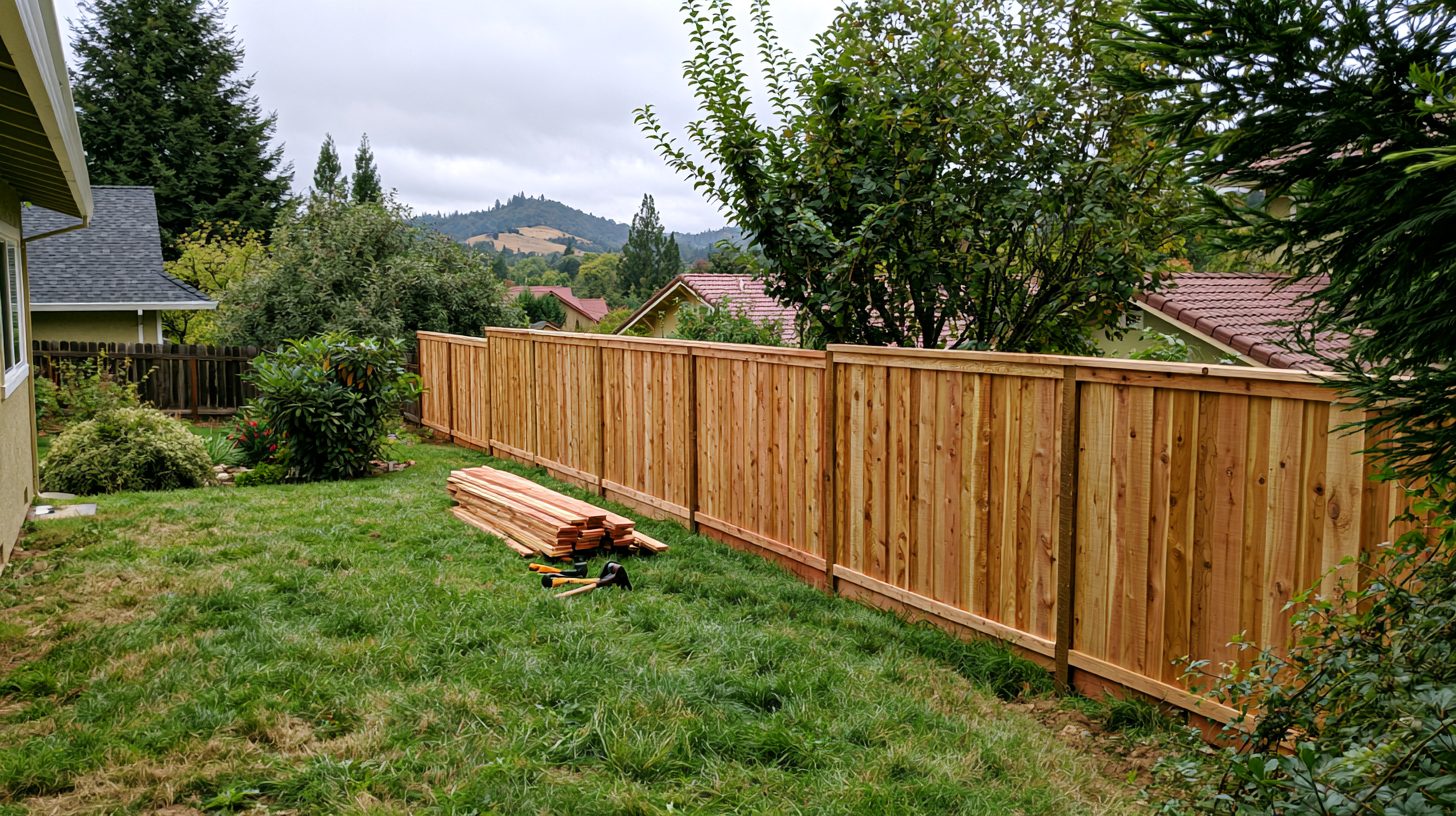
A new fence line is a bigger decision than most homeowners expect going in, the material, the height, the property line survey, and on hillside lots around Fairfax or San Anselmo, the grading itself all shape what actually gets built. We install new fencing across Marin for privacy, property definition, pool enclosures, and pets, in wood, vinyl, and chain link, sized and sited to hold up on the specific lot it's going on. If your existing fence just needs fixing rather than replacing, our fence repair page covers that instead, and a new fence line often gets planned alongside a new deck when both are part of the same backyard project.
Wood is still the most requested option in Marin for privacy fencing, and for good reason, it looks right in this setting and it's the most straightforward to repair down the line. Vinyl costs more upfront but needs almost no maintenance, which matters on properties where the fence sits in full coastal fog exposure. Chain link remains the practical choice for larger side and rear property lines, pet containment, or anywhere budget or code favors an open sightline over full privacy.
Properties in Marin's hillside and wildland-adjacent zones fall under California's defensible space requirements, which include a specific rule for wherever a fence attaches directly to a home or other structure. That rule targets the attachment point itself, requiring a section of non-combustible material there so the fence can't act as a path for embers or flame straight to the building. On any new installation in a defensible space zone, we build that attachment section to meet the requirement from the start, so it's never a retrofit you have to think about later.
Marin makes this easier than most counties once you know the numbers. In unincorporated Marin, a fence up to 7 feet tall doesn't need a permit. Go above that, or you're inside one of the incorporated towns, and you'll typically need a permit from the local Planning Division starting around 6 feet. Some towns are stricter in front yards: Ross caps front yard fences at 4 feet regardless of the overall town height rule, and Tiburon requires design review for anything over 42 inches facing the street. Shared property line fences also carry their own rules under California law about cost-sharing and notice to neighbors. We handle the permit paperwork on any job that needs one, and we always check your specific town's rule before we start, since a fence built a few inches too tall can mean a costly redo.
New fence costs in Marin break down mostly by material. Chain link is the least expensive option and the fastest to install, though most homeowners here choose it for side yards and utility areas rather than street-facing sections. Wood is the most common choice across the county, striking a balance between cost and curb appeal, with pricing that varies based on height, style, and whether you want board-on-board or a gap between pickets. Vinyl costs more upfront but needs almost no maintenance over time, which appeals to owners who don't want to think about staining or sealing every few years. In San Anselmo, where many properties border wooded lots, we often recommend cedar or redwood for its natural resistance to moisture. In Corte Madera, flatter lots mean more linear feet of fence per project, so material choice has a bigger impact on total cost than it does on a smaller, irregular lot.
We start with a site walk to confirm property lines, grading, and material choice, then a straight quote before anything is ordered. Once approved, most standard fence lines are installed within a week or two depending on length and material lead times, and we clean up and haul away all debris when the job's done.