 Fence Repair Marin
Fence Repair Marin
Fence Repair Marin
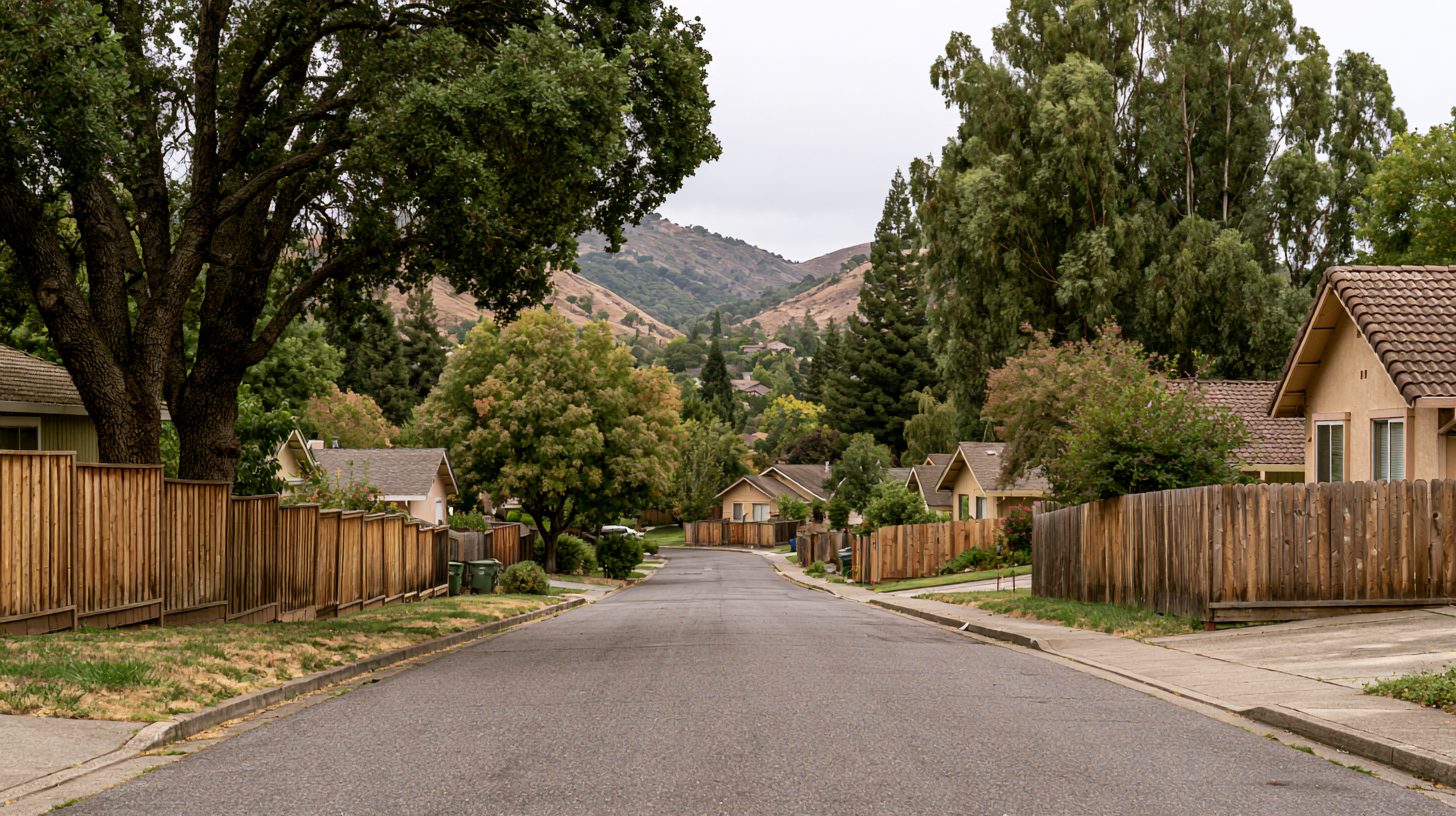
San Anselmo sits at the bottom of the Ross Valley, and the creek shapes everything else about the town. On New Year's Eve in 2005 it came over its banks and put more than four feet of water through downtown, damaging roughly 140 businesses and 290 homes. Fence lines in the low sections have been through that and through every smaller winter since.
What repeated flooding does to a fence is undramatic and easy to miss. Water saturates the soil around the posts, the soil loses its grip, and the line moves a little further each winter until one storm finishes it. If your fence has gone out of plumb in one spot and stayed that way, that is almost always the ground, not the panel you are looking at. A post reset done right, with the hole re-dug and drained rather than topped up with fresh concrete, is usually the difference between five more years and one.
The rest of town is older housing carrying original fencing that has already been patched by several different people. We will tell you when a run has given what it has. Call today for a free estimate on fence installation or deck repair in San Anselmo.
Given how often the ground here gets saturated, how a post is set matters more than what it is made of. The common way, and the wrong way, is to dig a hole, stand the post in it, and fill the whole thing with concrete so the post sits in a sealed cup. Water gets in at the top, cannot drain out the bottom, and the post rots at exactly the point where it is carrying the most load. What we do instead is put six inches or so of gravel in the bottom of the hole for drainage, set the post on that, then place the concrete around it and crown the top so it sheds water away from the wood rather than pooling against it. Depth matters too. Deeper than the frost line is not the issue in Marin. Deep enough that saturated soil cannot lever the post over is. Roughly a third of the post's above-ground height in the ground is the working rule, and more on a gate post. Upstream in Fairfax the same saturated soil moves posts on steeper ground.
A deck close to San Anselmo Creek has two problems a deck on high ground does not. The first is that the ground around the footings saturates repeatedly, and a footing sized for stable soil can move in soil that has been soft several winters running. Deeper footings bearing on undisturbed soil below the seasonal wet zone are the answer, and that is a design decision at build time rather than something added later. The second is that anything low to the ground near the creek spends part of its life damp. Framing lumber down there should be pressure treated rather than standard, joist tops protected, and the deck built with enough clearance underneath for air to move. Decks built flat to grade in this part of town do not last. If you are looking at one that has already gone soft, we will tell you whether the footings are salvageable, because that is the part that decides between a repair and a new deck.