 Fence Repair Marin
Fence Repair Marin
Fence Repair Marin
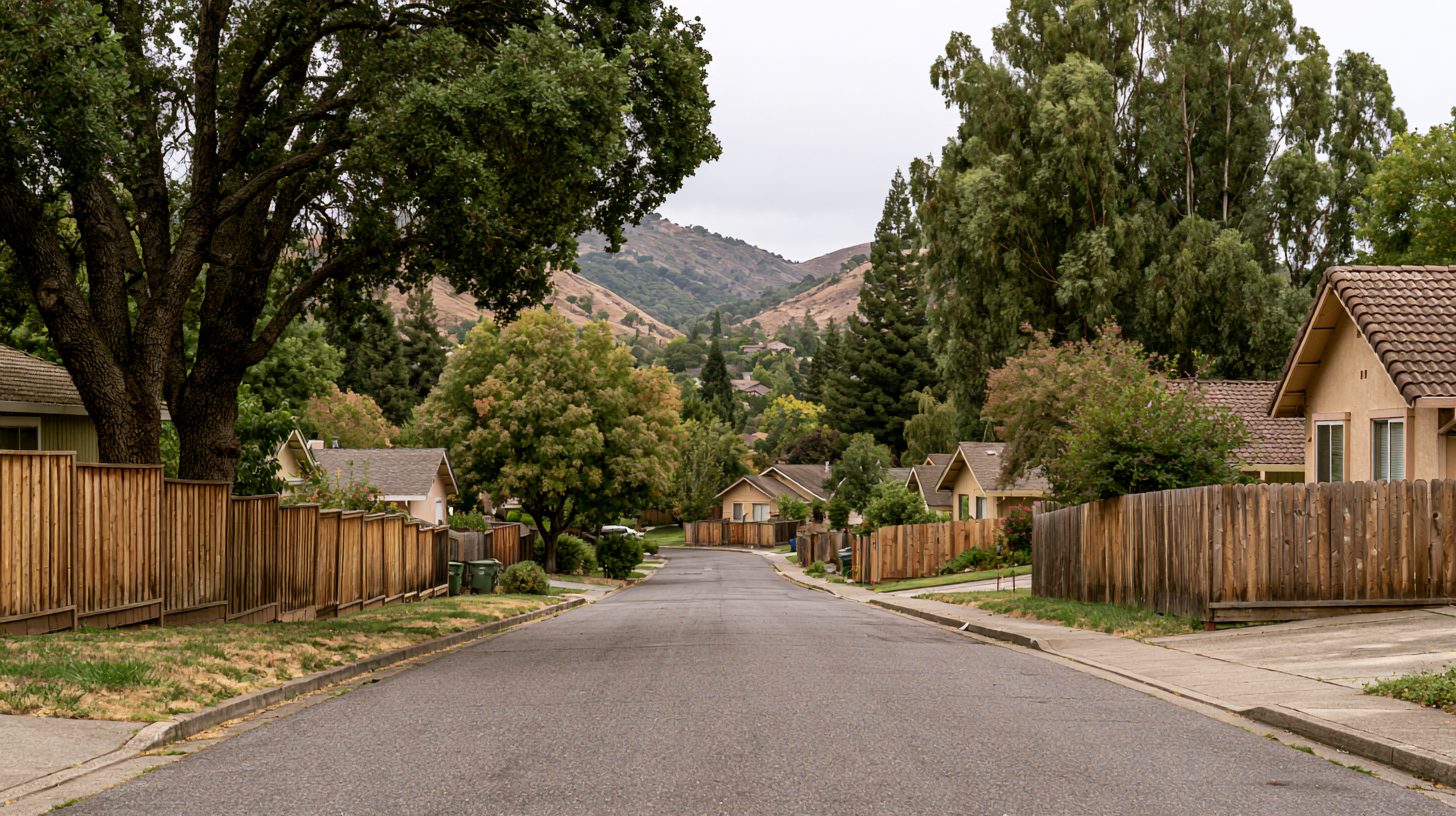
Fairfax began as a railroad resort town, and a good deal of the housing stock is still those summer cabins, winterized and added onto over the last century. Lots are irregular, lanes are narrow, and up the canyons the tree canopy runs right against the structures. Cascade Drive is single egress, one road in and the same road back out.
That puts much of the town in an elevated fire hazard zone, which changes the fence conversation. When a home in one of those zones sells, California's AB 38 requires defensible space documentation as part of the transaction, and a wood fence bolted to the side of the house is exactly the sort of thing that comes up. The fix is not complicated. A noncombustible section through the last five feet where the fence meets the wall, detailed properly, and the rest of the run can stay wood.
The canopy brings the other half of our work here, which is limb fall. One winter branch takes out two panels and a post, and a fence repair caught that week costs a fraction of one left through the season. Call today for a free estimate on fence installation or deck repair in Fairfax.
Fairfax lots were laid out for summer cabins, not for straight fence lines, and that shapes the work. Property lines run at angles, lots are rarely rectangular, and the ground falls away in the middle of a run more often than not. On sloping ground there are two ways to build. Stepped, where each panel is level and the fence descends in stair steps with triangular gaps at the bottom, or raked, where the panels follow the slope and the boards stay perpendicular to the ground. Stepped is simpler and works on gentle grades. Raked looks better on a steep run and leaves no gaps underneath, which matters if you have a dog. Neither is more expensive by much, and the choice is worth making deliberately rather than letting it happen. What actually costs money on these lots is the number of corners and grade changes, since each one is a post and a transition rather than a straight run of panels. Out in Novato the lots are flat and the same footage costs less.
A cabin up one of these canyons often has a deck that is doing more work than the house. Tall posts, sometimes eight or ten feet, carrying a structure out over a slope. Two things matter more on those than on a low deck. Lateral bracing, meaning diagonal members that keep the whole assembly from racking sideways, because a tall deck with vertical posts and no bracing can move in ways a short one never will. And the footings, which on a slope need to bear on undisturbed soil at a proper depth rather than on fill that has been sitting there since the cabin was built. A lot of the older decks here were built without permits by people improvising, and some of them are fine and some of them are not, which is genuinely not something you can tell from standing on it. We will get underneath and look. If it needs replacing we will quote a new deck and tell you why rather than leaving it vague.