 Fence Repair Marin
Fence Repair Marin
Fence Repair Marin
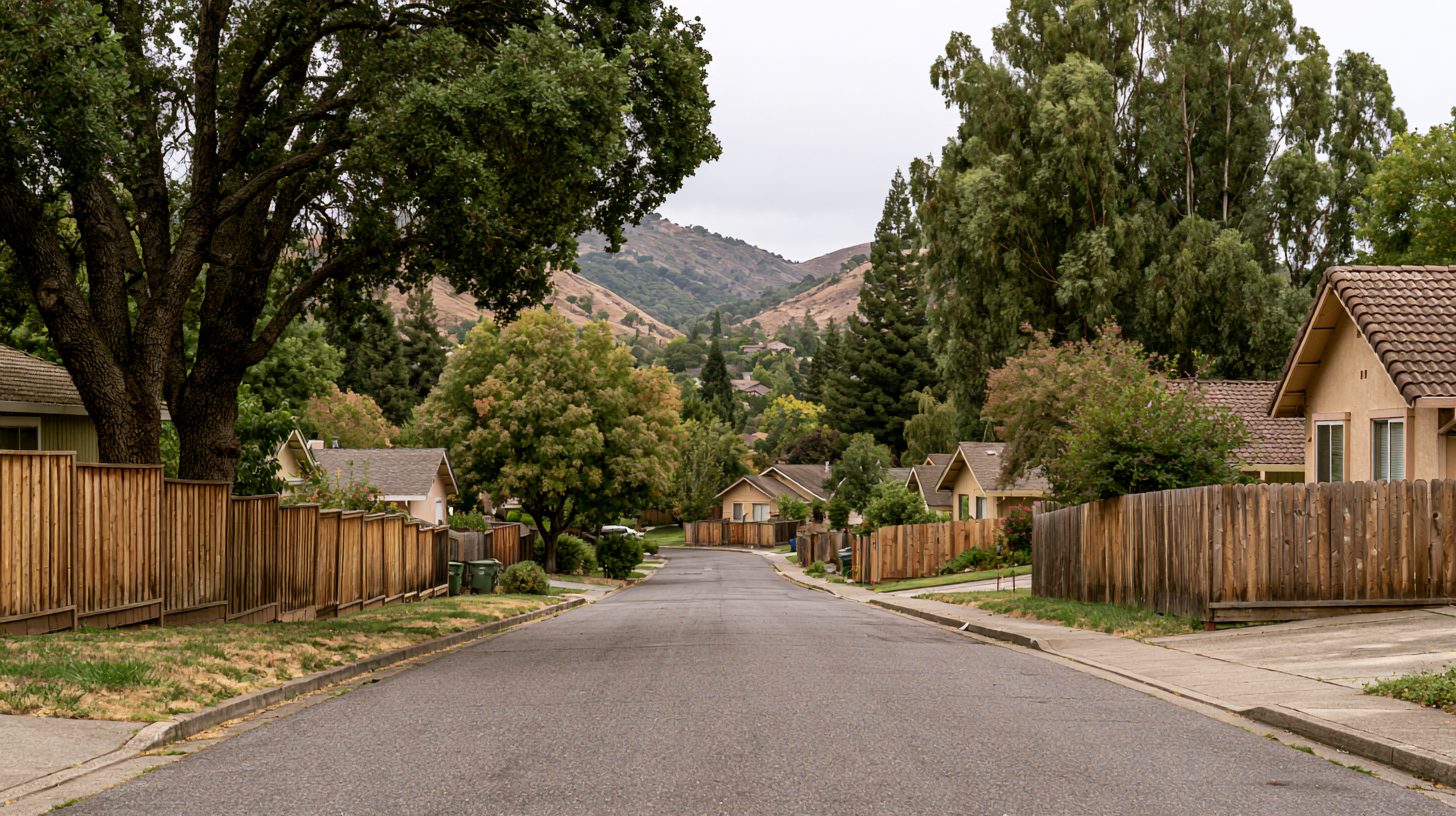
San Rafael covers more ground and more kinds of housing than any other city in Marin, and the fence work changes block to block. Downtown and Gerstle Park are older, closely spaced lots where your fence is also your neighbor's fence. Terra Linda is flat postwar tract and Eichler, long straight runs with nothing breaking the wind. Up on San Rafael Hill and out toward Peacock Gap the lots pitch and the posts are fighting gravity as much as weather.
Age is the thread running through all of it. A lot of what we get called out to look at was set thirty or forty years ago, when it was normal to drop a redwood post straight into wet concrete with no gravel base and no drainage under it. That post rots from the inside at grade, and by the time the fence leans, the wood you can actually see still looks fine. We dig one out before quoting so you know whether you are buying a fence repair or the first section of a replacement.
Shared fences also mean shared decisions, and we are happy to walk the line with both households and put the same numbers in front of everyone. Call today for a free estimate on fence installation or deck repair in San Rafael.
The question we get asked most here is whether to fix it or replace it, and the honest answer depends on a ratio rather than on age. Resetting a post means digging out the old footing, which is the labor, then re-setting with gravel underneath for drainage and new concrete. Replacing boards is cheap by comparison since the material is a fraction of the cost and the work is fast. So a fence with sound boards and three or four bad posts is worth repairing almost every time. Once you are past roughly a third of the posts, the arithmetic flips, because you are paying most of the labor of a new fence and still keeping wood that will need attention in a few years. We count the posts and tell you where you fall. On the closely spaced older lots here it is also worth checking whether the neighbor is looking at the same run before either of you commits. Larkspur canyon lots fail the same way for different reasons.
Up on San Rafael Hill and out toward Peacock Gap a deck is doing structural work, not just sitting on the ground. The part that fails first is almost never the decking you walk on. It is the ledger, the board bolted to the house that carries one whole edge of the deck, and the way it fails is water getting behind it because it was never flashed properly. That rots the rim joist of the house as well as the deck. Deck collapses in this country trace back to ledger connections more than to any other single cause, and the older the deck the more likely it was nailed rather than bolted. So when we look at a hillside deck we start at the house, not at the surface. Posts, footings and lateral bracing come next, since a tall deck on a slope needs to resist movement sideways as well as carry weight down. If what you have is past repair we will say so and quote a new deck instead of patching something that should not be patched.