 FENCE & DECKFence Repair Marin
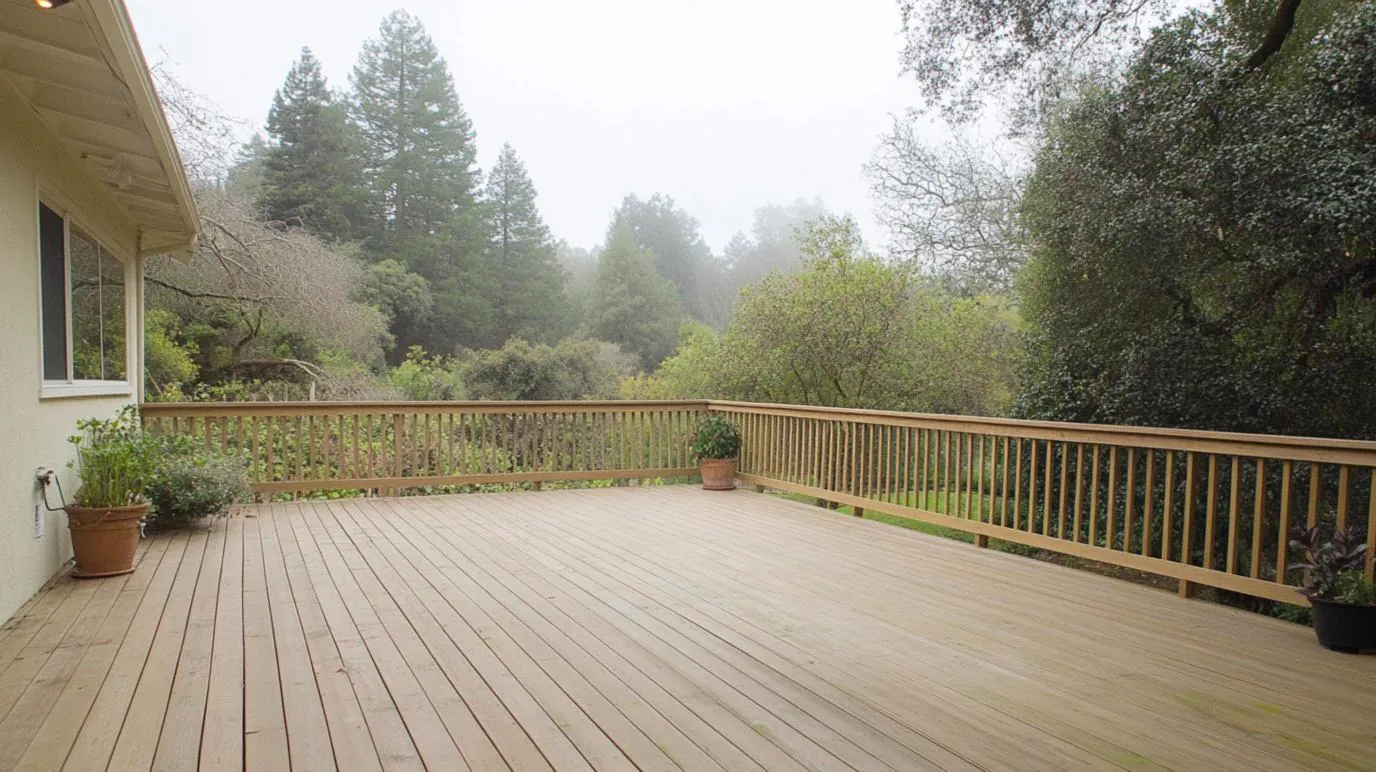
Larkspur decks fail in two different ways based on which side of town they're on. In the canyon, under the redwoods along Larkspur Creek, decks stay damp most of the year and rot from the inside out. Out toward Greenbrae, where the sun gets in, the same boards dry, crack and pull at their fasteners instead. We repair both, and the first job is always figuring out which one you're dealing with.
Most decks we look at here don't need to come out. Soft boards, a wobbly railing or a bouncy spot near the house can usually be fixed in place, as long as the framing underneath is still sound. If the deck is beyond saving, our deck installation page covers what a rebuild involves.
Push on any board that looks dark or soft. If it gives, water has gotten into it and it should be replaced before someone steps through. Look at the line where the deck joins the house too: staining, a gap, or wood that crumbles there means water is reaching the ledger, which can damage the house as well. A railing that moves when you lean on it is the most urgent fix of all. On the sunny side of town, watch for boards that have cupped, split along the grain or lifted at the screws. Gray wood alone is only a finish problem.
Ready to Get Started? Call Today for a Free Estimate.
Call (415) 942-9346In Madrone Canyon and along the creek, the enemy is moisture that never leaves. Needles and leaf litter pack between boards and hold water against the joists, so we look hard at the framing, replace rotted joists and add a protective membrane along their tops where boards trap water. In Greenbrae and the flatter lots, the problem is sun and movement. Boards shrink, fasteners back out and railings loosen at their posts. There, repair usually means re-fastening, replacing split boards, tightening the railing posts through the framing and getting a fresh finish on before the next summer.
We start under the deck, not on top of it, since rot usually spreads further than the surface shows. Your quote separates must-fix structural work from cosmetic work, so you can choose what to tackle now and what can wait. Damaged framing gets replaced first, then the ledger is re-flashed if water has been reaching it, then the boards and railings. We match materials as closely as possible and haul away everything we take out.
Shade and debris. Under the redwoods the boards rarely dry out completely, and needles packed into the gaps hold water against the framing for months. Wider spacing between boards, so debris can fall through, does more here than any sealer. Clearing the gaps twice a year and keeping the space under the deck clear goes a long way, and it helps with fire safety in the canyon too.
Usually close enough that it blends in after a season. New wood starts out lighter than boards that have weathered for years, so we either replace a full section where it's less noticeable or refinish the whole surface so it comes out one color. With composite, we try to match the brand and line, and if it's been discontinued we'll show you the closest options before ordering.
Not always. A little flex in the middle of a long span can be normal, but bounce that's new or getting worse usually means a joist, a post or the ledger connection is weakening. Keep gatherings off it until someone looks underneath. We check the ledger connection first, since that's where most serious deck failures start, and we'll tell you plainly whether to repair or rebuild.