Fence Repair in Marin County
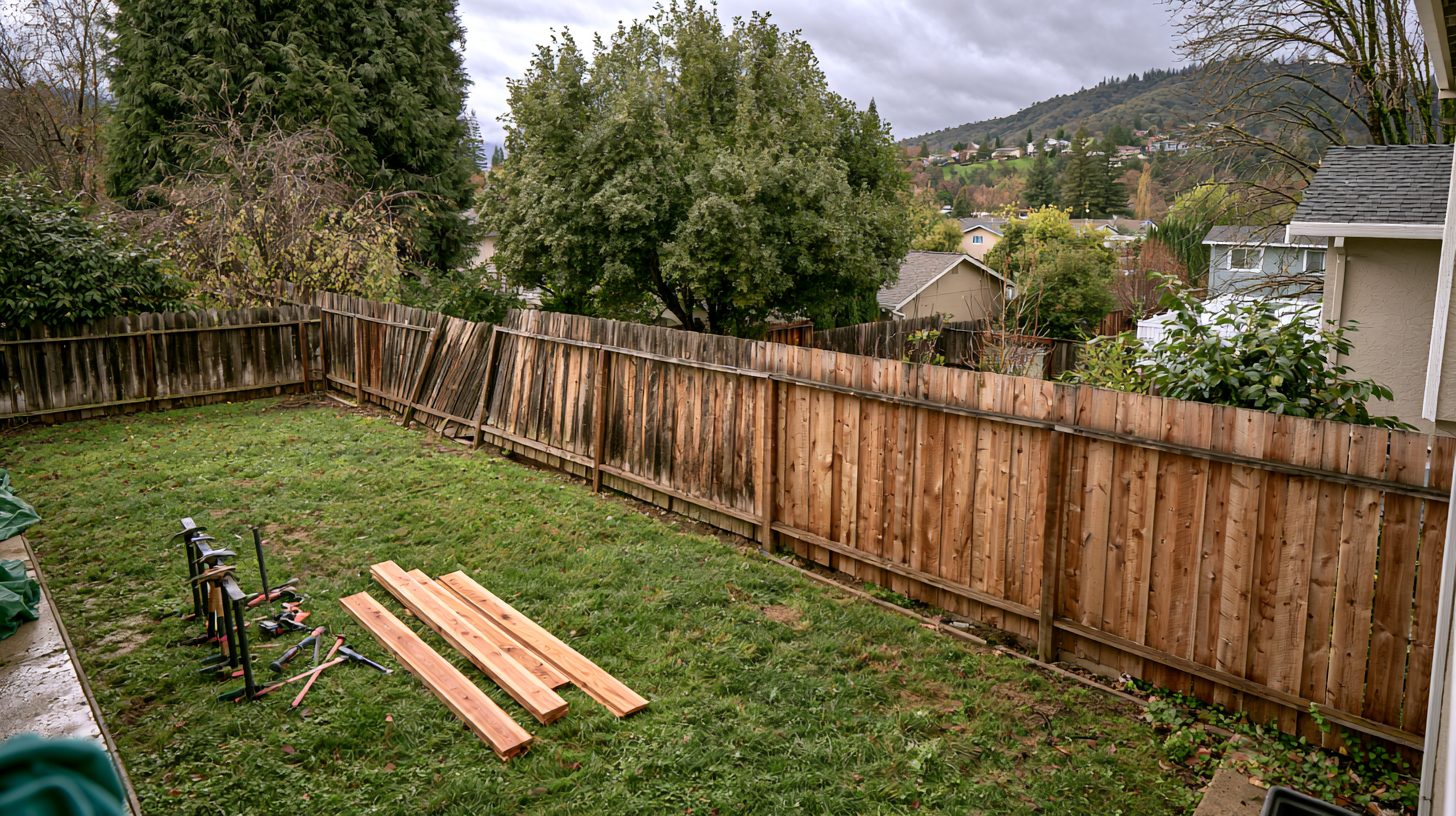
A leaning post in Novato, a storm-cracked panel in Fairfax, a gate that won't latch anymore in San Rafael, we see the same handful of failures across every neighborhood in the county, just at different stages. Most fence damage here starts small: a post base softens after a wet winter, a panel shifts an inch, a hinge starts to sag. Left alone through another season, that small problem turns into a full section replacement. Caught early, it's usually an afternoon fix. We repair every material found on Marin properties, wood, vinyl, chain link, wrought iron, and we're often out within the week of your call. If you're weighing repair against a full new fence line, our fence installation page covers that side, and if the fence issue is really water pooling against the base of a deck too, our deck repair page is worth a look as well.
Signs You Need Fence Repair, Not Just a Touch-Up
A fence that leans more than a couple of inches out of plumb usually means the post itself has failed at the base, not just the panel attached to it. Gates that scrape the ground or won't latch are almost always a sign the post they're hung on has shifted. Split or spongy wood at the base of a post, especially after a wet Marin winter, means rot has already set in below the soil line where you can't see it. Rust streaks running down a chain link or wrought iron section are an early warning sign worth calling about before the metal itself gives way.
Gate Repair
Gates take more abuse than any other part of a fence line, they get used daily, and the hardware bears all of it. A sagging gate is almost never a hinge problem by itself, it's usually the post it's mounted to that has shifted or softened. We reset posts, replace hardware, and square up frames so the gate swings and latches the way it did on day one, on wood, vinyl, and metal gates alike.
Building for Marin's Fire Rules
Marin's hillside and wildland-adjacent properties fall under California's defensible space requirements, which include specific rules for the section of fence attached directly to a home or other structure. The requirement focuses on that attachment point rather than the fence as a whole, calling for a section of non-combustible material where the fence meets the structure, so the fence itself can't carry an ember or flame path straight to your house. When we repair or rebuild a fence line on a property in a defensible space zone, we build that attachment section to meet the requirement as a matter of course.
Our Repair Process
We start with a walkthrough of the full fence line, not just the section you called about, since one failed post is often a sign that neighboring posts are close behind. You get a straight quote on the spot for what needs fixing now versus what can wait. Repairs typically happen within days of approval, and we clean up all debris before we call the job done.